About the Work—Friedrich Herz
When damage becomes form. Friedrich Herz carves monuments from the ruins of everyday object. He crafts forms, turns broken furniture into brutal sculpture. Discarted tables, stove tiles, scarred wood, transforming everyday materials into raw, poetic scultural forms.
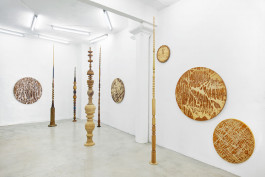
Kunstraum Ortloff, Leipzig - Round Table Top Low Speed Spire @sophiakesting
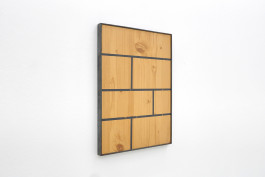
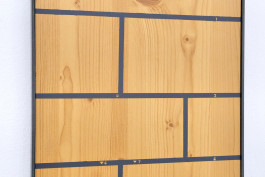
1,2,3,5,6,7, Holz Dekor Spanplatte, Acryl, Metallrahmen, 48 x 36 cm, 2023
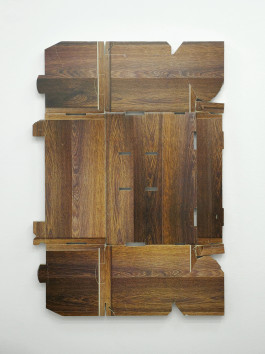
Nfld Bx, printed cardboard, mounted on multiplex, 120 x 80 cm, 2022
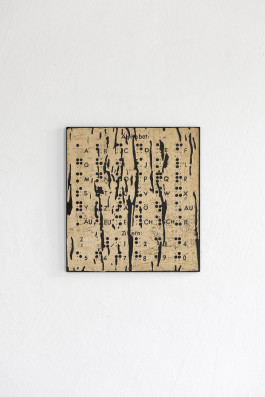
Alphabet for the blind, Carved screen printing plate, 39 x 36 cm, 2023
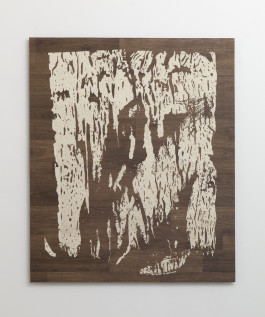
A.K.A., Carved PVC wood imitation on Aluminium, 124 x 99 cm, 2020
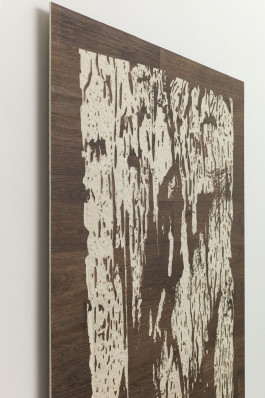
A.K.A., Carved PVC wood imitation on Aluminium, 124 x 99 cm, 2020
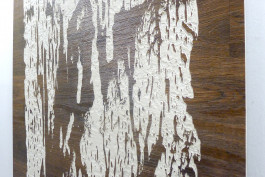
There’s a sound that comes before language. It’s the scrape of wood, the hollow ring of a found table leg, the burnt hiss of a stove tile. Each work is a ceremony without instructions, a bruise with memor. That’s where Friedrich Herz begins. His works don’t introduce themselves—they reveal themselves like bruises. You don’t just look at them. You trace them, you eavesdrop. The surfaces aren’t smooth. They resist. And in that resistance, something happens: memory, maybe. Or fiction dressed up as fact. In Herz’s world, nothing is whole. A column might be made from chair legs and stair railings, but it doesn’t feel nostalgic—it feels hacked together like a myth half-remembered. There’s elegance, yes, but it’s got splinters. These aren’t sculptures that want to be admired. They want to be read, misread, and misunderstood—like architectural ghosts or ceremonial props from a culture that never existed. His paintings aren’t paintings, at least not in the conventional sense. They’re extractions—rubbings, carvings, erasures. the circular wall reliefs: what looks at first like decorative texture reveals itself as a kind of visual scar tissue. The surfaces have been worked over—scraped, gouged, engraved. They carry the violence of their making. There’s beauty, but it’s not passive. It challenges you to look longer, and then look again. And just when you think you’ve decoded a pattern—tile, woodgrain, fossil, map—it slips into something else. That’s the point.
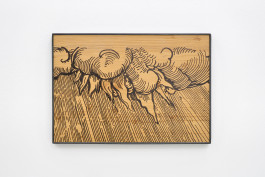
Heaven and thunder, permanent marker on wood decor chipboard, metal frame, 31 x 45 cm, 2023
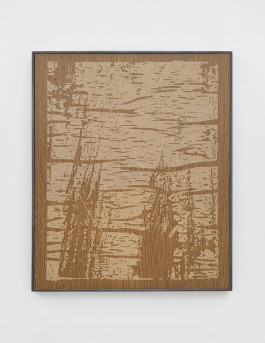
Basics of Instinct, carved laminate on MDF, 42 x 32 cm, 2023
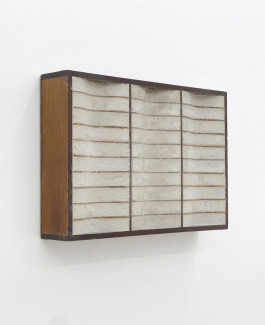
Taping offense, Cassette shelf, concrete, 25 x 38 x 8 cm, 2023
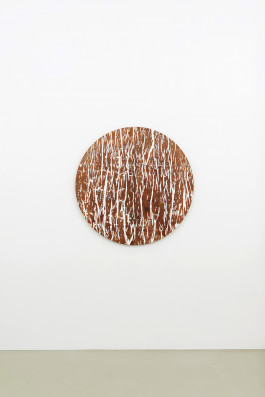
Va jouer!, Carved veneer, round table, plaster, Ø 100 cm, 2017
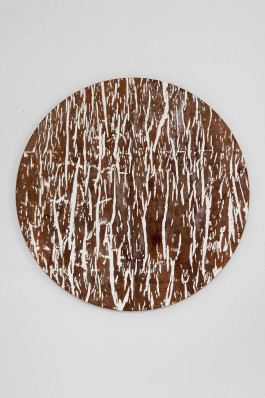
Va jouer!, Carved veneer, round table, plaster, Ø 100 cm, 2017
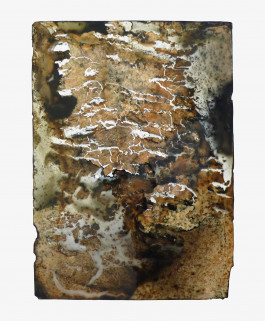
Searching the abstract, Collage, aquarelle and ink on glass, framed, 50 x 40 cm, 2012
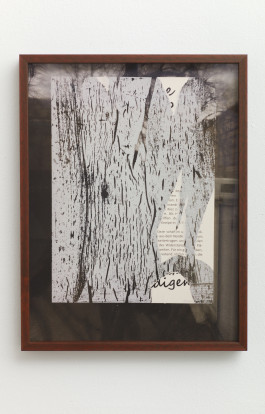
Kiez, Kneipe, Widerstand, Fotografie, Fine art print on Hahnemühlen Papier, 41 x 31 cm, 2020
Herz is building visual systems that don’t want to be solved. A carved stove plate suggests domesticity, but the mark-making feels ritualistic, almost volcanic. In fact, volcanoes do show up—on a worn T-shirt glued to canvas, a souvenir gone sacred. But these eruptions aren’t climactic. They’re quiet. They simmer. They feel held back. There’s humor in the work too, but it’s dry and structural. Like in the way he stacks antique furniture parts into totemic columns, letting them rise with analmost sarcastic grace. The sculptures say: this could be a monument, but it isn’t. This could be functional, but it refuses. It’s art that plays along—until it doesn’t. What makes Herz’s work hit is how physical it is. Nothing feels digitally distanced or overly theorized. He doesn’t outsource the labor—he carves, scrapes, assembles. The gesture is always present. You see the tool marks. You sense the time. That human residue, combined with the strangeness of the forms, creates something rare in contemporary art: work that feels truly lived in, even before you encounter it. And yet, nothing screams for attention. The pieces don’t demand—they persist. They haunt. They carry the stillness of objects that have waited a long time to be seen again. Or maybe to be misunderstood one more time, in a new way. Friedrich Herz doesn’t chase clarity or spectacle. He offers sediment. He offers friction. He builds with what’s been thrown out and lets those surfaces speak—quietly, slowly, with all their damage intact. In a scene obsessed with smoothness and speed, that kind of rough patience feels radical. And unforgettable!
About the Work—Friedrich Herz
When damage becomes form. Friedrich Herz carves monuments from the ruins of everyday object. He crafts forms, turns broken furniture into brutal sculpture. Discarted tables, stove tiles, scarred wood, transforming everyday materials into raw, poetic scultural forms.
Kunstraum Ortloff, Leipzig - Round Table Top Low Speed Spire @sophiakesting
1,2,3,5,6,7, Holz Dekor Spanplatte, Acryl, Metallrahmen, 48 x 36 cm, 2023
Nfld Bx, printed cardboard, mounted on multiplex, 120 x 80 cm, 2022
Alphabet for the blind, Carved screen printing plate, 39 x 36 cm, 2023
A.K.A., Carved PVC wood imitation on Aluminium, 124 x 99 cm, 2020
A.K.A., Carved PVC wood imitation on Aluminium, 124 x 99 cm, 2020
There’s a sound that comes before language. It’s the scrape of wood, the hollow ring of a found table leg, the burnt hiss of a stove tile. Each work is a ceremony without instructions, a bruise with memor. That’s where Friedrich Herz begins. His works don’t introduce themselves—they reveal themselves like bruises. You don’t just look at them. You trace them, you eavesdrop. The surfaces aren’t smooth. They resist. And in that resistance, something happens: memory, maybe. Or fiction dressed up as fact. In Herz’s world, nothing is whole. A column might be made from chair legs and stair railings, but it doesn’t feel nostalgic—it feels hacked together like a myth half-remembered. There’s elegance, yes, but it’s got splinters. These aren’t sculptures that want to be admired. They want to be read, misread, and misunderstood—like architectural ghosts or ceremonial props from a culture that never existed. His paintings aren’t paintings, at least not in the conventional sense. They’re extractions—rubbings, carvings, erasures. the circular wall reliefs: what looks at first like decorative texture reveals itself as a kind of visual scar tissue. The surfaces have been worked over—scraped, gouged, engraved. They carry the violence of their making. There’s beauty, but it’s not passive. It challenges you to look longer, and then look again. And just when you think you’ve decoded a pattern—tile, woodgrain, fossil, map—it slips into something else. That’s the point.
Heaven and thunder, permanent marker on wood decor chipboard, metal frame, 31 x 45 cm, 2023
Basics of Instinct, carved laminate on MDF, 42 x 32 cm, 2023
Taping offense, Cassette shelf, concrete, 25 x 38 x 8 cm, 2023
Va jouer!, Carved veneer, round table, plaster, Ø 100 cm, 2017
Va jouer!, Carved veneer, round table, plaster, Ø 100 cm, 2017
Searching the abstract, Collage, aquarelle and ink on glass, framed, 50 x 40 cm, 2012
Kiez, Kneipe, Widerstand, Fotografie, Fine art print on Hahnemühlen Papier, 41 x 31 cm, 2020
Herz is building visual systems that don’t want to be solved. A carved stove plate suggests domesticity, but the mark-making feels ritualistic, almost volcanic. In fact, volcanoes do show up—on a worn T-shirt glued to canvas, a souvenir gone sacred. But these eruptions aren’t climactic. They’re quiet. They simmer. They feel held back. There’s humor in the work too, but it’s dry and structural. Like in the way he stacks antique furniture parts into totemic columns, letting them rise with analmost sarcastic grace. The sculptures say: this could be a monument, but it isn’t. This could be functional, but it refuses. It’s art that plays along—until it doesn’t. What makes Herz’s work hit is how physical it is. Nothing feels digitally distanced or overly theorized. He doesn’t outsource the labor—he carves, scrapes, assembles. The gesture is always present. You see the tool marks. You sense the time. That human residue, combined with the strangeness of the forms, creates something rare in contemporary art: work that feels truly lived in, even before you encounter it. And yet, nothing screams for attention. The pieces don’t demand—they persist. They haunt. They carry the stillness of objects that have waited a long time to be seen again. Or maybe to be misunderstood one more time, in a new way. Friedrich Herz doesn’t chase clarity or spectacle. He offers sediment. He offers friction. He builds with what’s been thrown out and lets those surfaces speak—quietly, slowly, with all their damage intact. In a scene obsessed with smoothness and speed, that kind of rough patience feels radical. And unforgettable!